War, and Madness

Jerusalem Report, 28/3

The cold numbers are the first thing that hit you. Figures telling of a human catastrophe on a scale hard to compute. Suffering on a level to which any rational response seems inadequate – 470,000 people killed, according to the latest estimates; 11.5 percent of the population injured; 45 percent of a country of 22 million made homeless; 4 million refugees and 6.36 million internally displaced persons. Life expectancy is down from 70.5 years in 2010 to an estimated 55.4 years in 2015. Welcome to the Syrian civil war.


For those of us who have covered the war closely, these are not just numbers in black and white. They have behind them searing images and memories impossible to erase.


I remember the throngs of refugees in the olive groves close to the border fence north of Aleppo in the summer of 2012. The battle for the city was raging at its full murderous strength a few kilometers to the south. The refugees, mostly Sunni Arabs, were trying to find a place safe from the destructive intentions of Bashar Assad’s air force. They had no way to get into Turkey. Their forlorn hope was to take their families as close as possible to the border fence. They believed that the Syrian Air Force would not dare to bomb so close to the powerful northern neighbor.


Whole families with small children ‒ some people terribly wounded by the bombings ‒ living in the olive groves with neither shelter nor provisions. But I had been in Aleppo city, too, and I knew that their calculation made sense. Inside the city, the barrel bombs were falling without discrimination. Houses, buildings, lives turned into nothing.


This is what the figures are made of. For five years, this is what the lives of Syrians have looked like. It is the greatest catastrophe to have hit the Levant since World War II.


Few people saw the war coming. For a moment, it looked as though the wave of regional change would pass Syria by. The prison-house state constructed by the Ba’ath Party had strong walls, after all. Its residents seemed too cowed, too intimidated to challenge their dictator.


Assad himself, in a strange interview given to the Wall Street Journal, published January 31, 2011, explained why, in his view, Syria had not and would not experience instability. “We have more difficult circumstances than most of the Arab countries but in spite of that Syria is stable,” the dictator said. “Why? Because you have to be very closely linked to the beliefs of the people. This is the core issue. When there is divergence between your policy and the people’s beliefs and interests, you will have this vacuum that creates disturbance.”


Here was the language of the Arab nationalist police state in all its self-assurance and blindness. The prisons full of political prisoners. The citizenry cowed by an all-embracing structure of surveillance and repression. And on top of it all, the “president” blithely insisting to his compliant Western interviewer that the stability was the result of a kind of tacit contract of consent between the regime and the people.


It couldn’t hold. And, of course, it didn’t. As nemesis follows hubris, so in March 2011, demonstrations by schoolchildren in Dera’a province were brutally repressed by the local security forces. A boy called Hamza al-Khatib who was murdered in custody became the symbol for the protests. The unrest spread to other Sunni Arab parts of the country – Homs, Hama, Banias. Assad, whose rule, he had claimed, rested on the unspoken consent of his people, rapidly and predictably abandoned any such nonsense and sought simply to drown the spreading protests in the blood of the protesters.


By summer, the stage was set for the civil war to come. The death toll was rapidly mounting. Western leaders called for Assad’s resignation in August. But Assad was going nowhere. These were the days of the Arab Spring. People power and demonstrations were supposed to be enough to bring down the dictators. This happy narrative neglected to note a fact of salient importance. Deposed dictators – Zine El Abidine Bin-Ali in Tunisia, Hosni Mubarak in Egypt, Ali Abdullah Salah in Yemen – had fallen not only or mainly because of popular unrest against them. They were deposed because their patron, the United States of America, chose to abandon them in their hour of need. Assad had chosen different friends. He wasn’t aligned with the West, but with Russia and the Islamic Republic of Iran. And the response of these two powers, from the very outset, was to provide the dictator with whatever level of support he required to stay in his seat.


The form this took varied. Russia used its Security Council veto at the UN to prevent any concerted action against the regime. Moscow also kept the weapons coming. The Iranians used their expertise in crowd control to help Assad control the demonstrations. By the end of 2011, it was clear that the bright lie of the “Arab Spring,” according to which beautiful young people marching in the streets was all it took to topple dictators, wasn’t going to work in Syria.


At this point, the opposition made the fateful decision to try a different way. Already, groups of recently deserted soldiers were arming themselves to defend the demonstrations against the attentions of Assad’s soldiers. In early 2012, these began to crystallize into the first rebel battalions, organizing not only to defend protests, but also to attack the army and make areas in revolt impassable for the government’s forces. The stage was set for war.


I visited rebel-controlled Syria for the first time during that period. Idlib Province – one of the heartlands of the emergent insurgency. I remember the fevered atmosphere of the time and the hopes of swift victory. I interviewed a recent defector from Assad’s airborne troops in a village called Sarmin close to Idlib City. Lieutenant Bilal Khabir was typical of the type of fighters who were capturing the world’s attention at that time. Young, idealistic and brave, Khabir had deserted his unit after a brother officer was executed for refusing to fire on civilian demonstrators in Dera’a.


“I am with the law, not against the law,” Khabir had told me, as we sat in a halfbuilt structure that formed the rebels’ headquarters in Sarmin. “The regime is fascist and criminal. We expect what happened in Homs to happen here. But even with our simple weapons, we are ready to fight. Either Bashar stays, or we stay. And freedom is the promise of God on earth.”
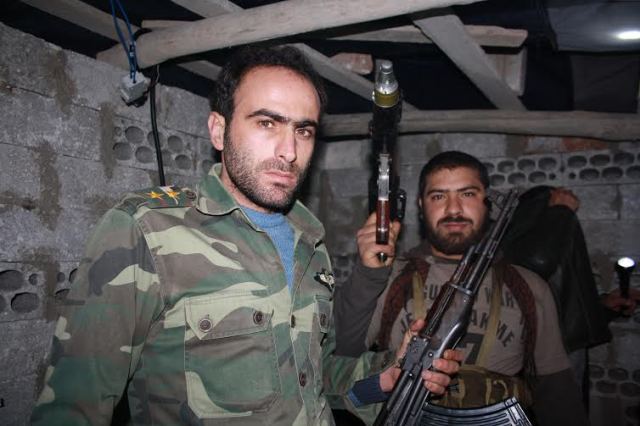
bilal khabir

They fought. Khabir himself rose to senior command in the rebellion in Idlib, before being terribly wounded in action in 2013. The rebels of Idlib and Aleppo and Dera’a, Quneitra and Raqqa, Homs and Hama and Deir al-Zor and Damascus made much of those areas no-go zones for Assad’s army in the year that followed.


But even then, in those first days, it was possible to discern the sectarian hand inside the velvet glove of the rebellion’s fine words. In Sarmin and Binnish, in February of 2012, Salafi fighting groups separate from the ragtag recent army deserters were already operating openly, apart from the enthusiastic, often younger rebels of the non-Islamist units. As the bloodletting continued in 2012 and 2013, it was these organizations that began to make headway. The secular rebels had no real vision or idea to put in their place. They just wanted to destroy Assad. The ideas came from the Islamists. The money, meanwhile, was coming mainly from Qatar and Turkey. Both these countries favored the emergent Islamist groups, whose inclinations mirrored their own.


And, of course, there was a discernible sectarian logic to the rebellion from the start. The Assad family hailed from the country’s 12 percent Alawi minority. By no means were all those who had benefited from Assad’s rule Alawis. There were Sunni Arabs and others in senior positions. Similarly, it was possible to find non-Sunnis and non-Arabs among the rebels. But the core dynamic was one in which the dictator relied, ultimately, on the support of his sect. The Shabiha, Alawi thugs and criminals, who would later be organized by the Iranians into a well-drilled militia, were crucial to the regime’s survival from the start. Alawi-dominated military units – the special forces, the Republican Guard, the 4th Armored Division – were also relied upon from the outset when the large formations of Sunni conscripts were of doubtful loyalty.


The rebellion, similarly, emerged from the 60 percent Sunni-Arab majority of the country. In the course of 2012 and 2013, the sectarian logic of the war became increasingly inescapable. It was marked by the emergence of new and powerful formations that would play a crucial role. In the summer of 2012, Assad carried out a strategic withdrawal from a large swathe of Syria’s northern border with Turkey. The withdrawal was itself dictated by sectarian logic. Assad was short of manpower. Because of his regime’s narrow base, it had become clear that he did not have sufficient men to hold the entirety of a country largely in revolt against him. This fateful decision, made out of urgent necessity, began the process of fragmentation that is now very advanced in Syria. In the course of 2012 and 2013, the country effectively separated into a number of enclaves that survive to this day.


The regime held on to Damascus and the western coastal areas, and the road links between them.The Sunni rebels and Islamists had the east and south.The local franchise of the Kurdish PKK (Kurdish Workers Party), known as the PYD (Democratic Union Party), established itself as the de facto ruler of three non-contiguous Kurdish enclaves stretching along the Syrian-Turkish border. Their formidable Kurdish YPG militia emerged as one of the most powerful of the military organizations, which now divided control of the territory of Syria between them. The emergence of the Kurdish enclaves was further testimony to the sectarian dynamic now underlying the war.
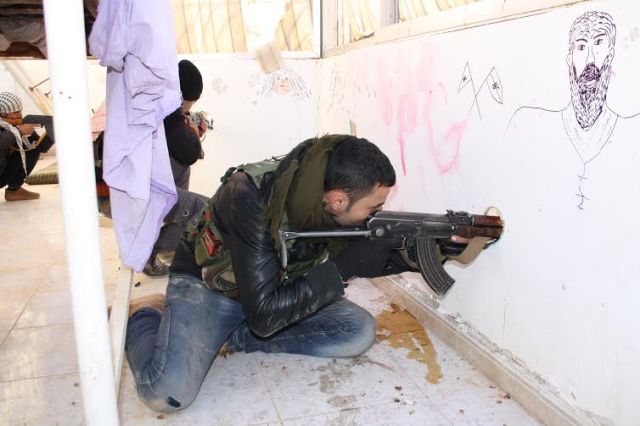
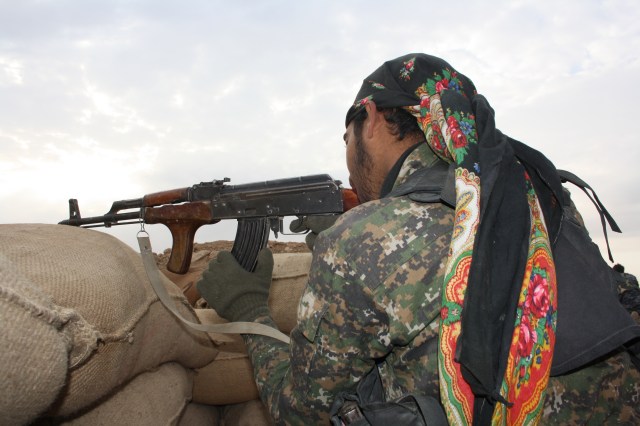
ypg fighter sere kaniyeh


The rise of extreme Salafi Islamist groups from the womb of the rebellion confirmed the trend. On January 23, 2012, the foundation of the Jabhat an-Nusra li-Ahl ash-Shām (Support Front for the People of the Levant) was announced. Usually shortened to Jabhat al-Nusra, this was the official franchise of the al-Qaida network in Syria. Led by Sheikh Muhammad al-Julani it quickly gained a reputation for military effectiveness and particular ruthlessness. Then, in May 2013, in the course of a dispute between the Nusra leadership and the leadership of the Iraqi franchise of al-Qaida, a faction began operating in Syria under the name of the Islamic State in Iraq and al-Sham (ISIS, or ISIL). Little noticed at the time, this jihadi group was set to transform the Syrian conflict, and then the region.


I entered Syria for reporting purposes on numerous occasions during that period. Amid the chaos and suffering, it was possible to discern that something extraordinary was taking place. The state structures that had existed since the early 20th century in this area – “Syria” and later “Iraq” were effectively ceasing to exist.


The old borders did not deter the military groups. Journalists crossed “illegally” with rebel assistance. Sometimes the crossings were lengthy and perilous affairs. But, more often, the border was hardly noticed, fictionalized. What had appeared at the beginning to be a war of a populace against a brutal dictatorship turned out to be something else entirely. The walls of the prison-house states of Syria and Iraq had been breached. New and unfamiliar entities were making war among the ruins.
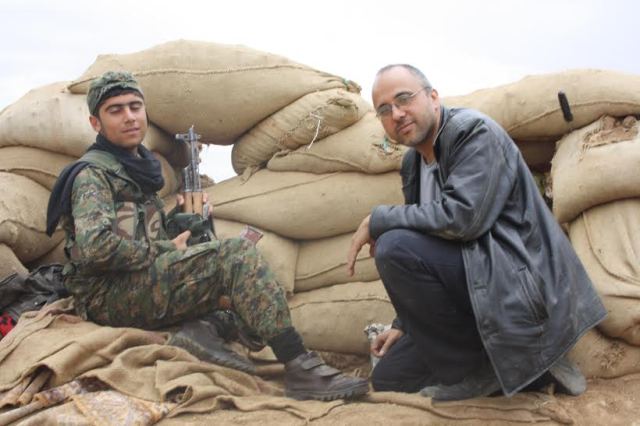
with ypg fighter

In the Turkish border town of Kielis, in the early summer of 2014, I interviewed two ISIS members. I had just crossed back from Syria, after visiting the besieged Kurdish Kobani enclave.


At a place called Haj Ismail, a few days previously, comrades of the two men I met in Kielis had been shooting at me while I was interviewing a YPG commander at a forward position. The ISIS positions were about 200 meters away, across a flat, blank landscape. The firing began and I ran after the fighters as they raced for a machine-gun position behind some sandbags to return fire. It was a routine incident along a tense section of frontline. But it was passingly strange to be sitting in a room chatting and drinking tea with the men on the other side of the lines, just two days later.


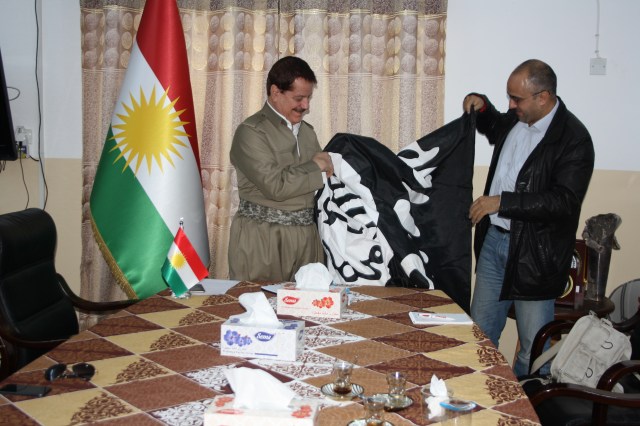
The two men called themselves Abu Muhammad and Abu Nur. They were both Syrians. “If ISIS falls, you can forget about Sunni people in Syria,” Abu Muhammad told me, after relating the story of his own long journey to the jihadi organization. The men were animated by a strange combination of local sectarianism and vast, millennial hostility to the West. The two fitted seamlessly together and the power of their combination was evident in the rapid growth of ISIS and the bloodthirsty fanaticism of its fighters.


As for the movement’s goal, Abu Nur spoke about it with reverence. ‘We want the caliphate, something old and new, from the time of Muhammad. The Europeans came here and created false borders. We want to break these borders.” ISIS, in other words, was emerging directly from the reality of the Levant in 2014.


The situation, indeed, was becoming increasingly clear. As my friend Mahmoud, a onetime teacher turned political analyst and a supporter of the rebels bluntly expressed it, “In Syria, today, there are three groups worth mentioning. ISIS, the regime and the Kurds. Nothing else.”


The reality of fragmentation and sectarian war burst across the borders a few months after that interview with the astonishing advance of ISIS into Iraq. By August, the jihadis had reached the gates of Baghdad and Erbil. They were stopped only after the entry of US air power into the fray.


The advance of ISIS into Iraq brought the logic of the Syrian war into the larger neighboring country. In the dramatic and terrifying events around Sinjar Mountain that summer ‒ the harrowing attempt at the genocide of the Yazidi people ‒the sheer savagery of the Sunni jihadis was laid bare. Here was a horror that defied description. But, while the singling out of the Yazidis carried with it a special evil, the Assad regime remained responsible for, by far, the largest number of the deaths in Syria.


The situation today retains the essential contours that emerged in mid-2014. The Syrian war has metastasized across borders. As a result, neither Syria, nor Iraq, nor indeed Lebanon any longer constitute states in the usually understood sense of that word. Rather, the entire vast landscape between the Iraq-Iran border and the Mediterranean Sea is, today, divided up between various political-military organizations and arrangements, almost exclusively organized along religious sectarian or ethnic lines.
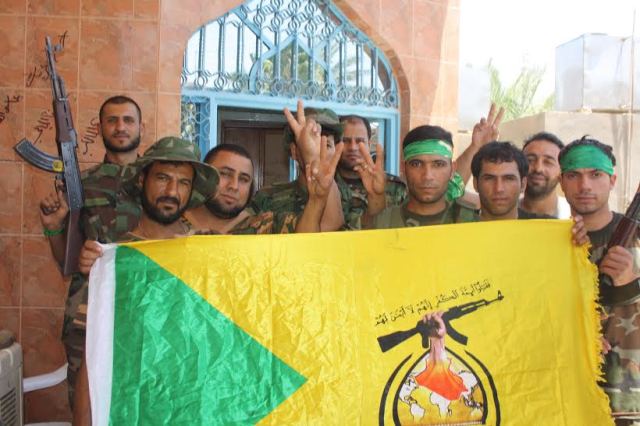
ktaeb hizballah fighters

They vary in orientation from the radical secularism and socialist outlook of the Syrian Kurds in autonomous “Rojava” to the murderous and apocalyptic Sunni jihadism of the Islamic State.


Along the way, one may find the Iran-oriented Shi’ite Islamism of Hezbollah and the Shi’ite militias of Iraq, the pro-Western, tribal conservatism of the Kurdish Regional Government in Iraq, and various types of Sunni Islamism in the poorly governed wastelands of the Syrian-Sunni rebels.


The war has, of course, also impacted far beyond the Middle East itself. The US and the West have staunchly sought to keep their involvement to a minimum. But, today, Western air power and special forces are playing a key role in the effort to reduce and destroy the Islamic State.


Further west, the Russian intervention after September 2015 almost certainly saved the Assad regime from destruction and reversed the course of the war. Currently, there are peace negotiations in Geneva and a fitfully observed cease-fire.


But the cease-fire relates only to the original war in Syria (regime vs. rebels). It doesn’t impact on the other conflicts that emerged from its womb (YPG/SDF against ISIS, rebels against Kurds, KRG and Iraq against ISIS, Turks against PKK, regime against ISIS.


The bombings in Brussels on March 22 are the latest demonstration of the far reach of the war. What began with demonstrations by schoolchildren in Dera’a has now turned into a process of flux and convulsion of historic proportion.


I think of the Syrian war, and my mind is filled once more with memories of astonishing vividness: The deep blue of the sky during a barrel bombing of the Sha’ar neighborhood in Aleppo, in the scorching summer of 2012. YPG fighters crossing the Tigris River in dinghies by night, in dead silence. The swishing of the water, the stars reflected in it and the blank expanse ahead. A hospital for Kurdish fighters in Derik, in summer 2014, filled with men wounded in the fight to open the corridor to Sinjar Mountain and the trapped Yazidis.Very dark-skinned Ktaeb Hezbollah militiamen at a frontline position just east of Ramadi city in Iraq in July 2015. The ghost-like figures of ISIS men, in black, running quickly past a gap in their defensive position. The first rebels, in Idlib Province, with hope, long since lost. The Yazidi refugees, just down from Sinjar, at the Newroz refugee camp in summer 2014, their exhausted, haunted eyes and the black horror of the things they described.
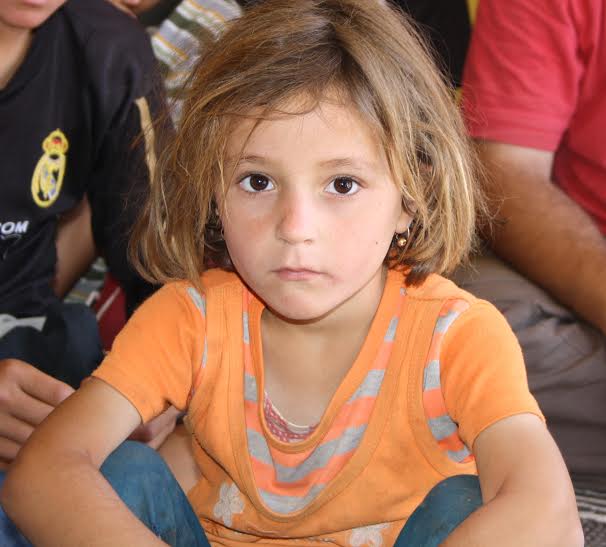
yezidi refugee

We are left with the bare facts behind all this – facts with which the policymaking echelon in the West has only just begun to grapple. The prison-house states are broken to pieces. The forces released from their ruins are swirling and clashing across the region and heading beyond it. Syria has become one of the hinges upon which regional and global events turn. The reputations of great powers, global and regional, are being made and broken among its ruins. It is war, and madness. And it is far from over.
 

Posted in Uncategorized | 1 Comment

Assessing the Syrian cease-fire

Jerusalem Post, 13/3

The cease-fire that came into effect in Syria on February 27 is a partial success. Humanitarian convoys have begun to get through to some of the areas besieged by government forces. The death toll is sharply down. According to the Syrian Observatory for Human Rights, the civilian death toll in Syria fell by 90 percent last week. This was accompanied by an 80% decline in deaths among combatants on all sides.

“Proximity” talks between the sides are set to commence in Geneva on Wednesday.

So does the cease-fire in Syria represent the beginnings of an endgame in the long and bloody civil war which has racked the country since mid-2011?

This is a war in which, according to a recent report by the Damascus-based Syrian Center for Policy Research, up to 470,000 people have died. Fully 11.5% of the population have been killed or injured, and 45% have left their homes.

As of now, there remains very little chance of the implementation of the plan as outlined in Vienna last November for the diplomatic process in Syria. According to this plan, within six months of the commencement of negotiations, the sides are to establish a “credible, inclusive and nonsectarian” transitional government. This government will then set about drafting a new constitution and holding free and fair UN-supervised election within 18 months.

The tentative success of the February 27 cease-fire notwithstanding, this plan still sounds utterly unrealistic. Its main stumbling block remains the core disagreement between regime and opposition over the future role of President Bashar Assad. For the opposition, any role for Assad in the course of the transition remains utterly unacceptable.

For Assad, riding high on the results of the Russian intervention which began in September last year, there is no reason to compromise or contemplate departure. On the contrary, the Syrian dictator bullishly (and absurdly) announced this week that parliamentary elections will take place across Syria on April 13.

Since the officially sanctioned diplomatic process remains somewhat other-wordly, and yet the cease-fire has not been a total failure, what direction are events likely to take?

As of now, Syria has fragmented, and a host of related conflicts are taking place over its ruins. The Russian intervention has effectively removed from the table the possibility of the military destruction of the dictatorship. For this to be achieved, an air force capable of besting that of the Russians, who guarantee Assad’s survival, would need to enter the fray. Such air power is possessed only by the US. Washington has absolutely no intention of acting as the air wing of the Syrian Sunni rebels, in a way analogous to that of the Russians vis-à-vis the regime.

Since this is likely to remain the case, it follows that there is no longer any credible military threat to the continued existence of the Assad regime in its enclave in Damascus, in the western coastal area, in the cities of western Syria and in the areas linking them.

This being said, it remains the case that a regime reconquest of the entirety of Syria also remains unlikely. Assad, in a recent interview, declared this to be his goal. But it is unlikely that the actual forces that could conceivably achieve this goal for him – Russian air power and Iranian proxies on the ground – are interested in pursuing it. Iran is withdrawing Iranian Revolutionary Guard Corps personnel from northwest Syria. The immediate goal of preventing any threat to the regime has been achieved. The Iranian regime does not appear to wish to commit its own forces to the mutual slaughterhouse that a campaign to reconquer all of rebel and Sunni jihadist-controlled Syria would entail.

The Russians, too, are now withdrawing. They appear wary of a long and grinding campaign of reconquest. With a devalued ruble and very low oil prices, it is not clear that they could sustain the necessary expenditure. Again, the goal of the Russian campaign appears to have been to preserve the regime enclave, not to enter an all out assault for the reunification of Syria by military means.

Even Assad himself may be aware that an attempt at reunifying the country under his rule would bring back the original dilemma that caused his withdrawal in the first place. Assad does not possess sufficient forces to securely govern those areas that reject his rule. The Russian intervention has not altered this core reality.

Russia wants to see the removal of Ukraine-related sanctions on it, and to be treated as a world power. Backing its allies and ensuring their survival forms a part of this. An ongoing bloody campaign of reconquest is unlikely to do so.

So if the disparate rebellion can’t beat Assad, and if Assad is unlikely to achieve or even try for a knockout blow against the rebellion, and if there is no basis for a negotiated settlement, doesn’t that mean that the diplomacy is doomed, the cease-fire bound to be short-lived, and a return to full blown conflict inevitable?

Maybe, but not necessarily. It is worth remembering that there are two other vital players on the Syrian map, apart from the Assad regime and the Sunni Arab rebellion. The two other elements are the Kurds, and Islamic State. As of now, a Western-backed military alliance, the Syrian Democratic Forces, is making steady headway against Islamic State. If this progress can continue, the prospect opening up in Syria will be for a Russian-guaranteed, Assad-ruled west, and a US-guaranteed east, in which Islamic State has either been destroyed or is in the process of eclipse.

On this basis, with neither side able to dislodge the other and neither side having an obvious interest in continued conflict (or with each side deterred by inescapable realities if they do), it is possible to imagine the beginning of a diplomatic process based on the emergence of a confederal or de facto divided Syria.

Such an outcome is, of course, not certain, but it is possible. If it does not emerge, the bloodletting in Syria is likely to recommence with full force in the future, and the current cease-fire to be remembered as little more than a brief respite.


Posted in Uncategorized | 2 Comments

A recent interview on CBN


Posted in Uncategorized | Leave a comment

How Israel Navigated through the Hurricane of the Syrian Civil War

The Tower Magazine, 4/3/16
The Syrian civil war is a disaster of historic proportions that shows no sign of ending anytime soon. The latest figures suggest that it has killed nearly half a million people, making it the greatest catastrophe to hit the Levant since 1945, dwarfing earlier crises in terms of its human cost. But throughout all this carnage, only one country that borders Syria has managed to remain largely immune to the side effects of the war. That country is Israel.

With constant fighting on the other side of the border, life in the Israeli-controlled part of the Golan Heights and in the Galilee goes on much as before the Syrian war began in 2011. This is not simply the result of good luck. It represents a quiet but notable success for an Israeli policy pursued over the last four years. This policy avoids taking sides on the larger question of who should govern Syria. Instead, Israel has sought to forge local alliances with rebel elements close to the border in order to prevent Iran and its allies from establishing a new platform for attacks on Israel, and keep Islamic State-aligned forces away from the border. So far, they have mostly worked.

Jerusalem has also worked to strengthen the physical infrastructure on the border. It has reordered its military presence, invested in a new border fence, deployed drones and other means of electronic surveillance, and created a new Combat Intelligence Collection Battalion.

At the same time, Israel has acted on a number of occasions to prevent the transfer of sophisticated weapons systems to Hezbollah in Lebanon, and has probably carried out targeted killings on Syrian soil.

With the Syrian war now transformed as a result of Russian intervention, it is an appropriate time to look at the emergence of this policy and the reasons for its success.

The Israeli political and security establishments have been beset by differences over the Syrian war since it first broke out. Prior to the war, a powerful body of opinion within the country’s defense establishment regarded the regime of dictator Bashar Assad as the “weakest link” in an Iran-led regional axis. The hope was that a blow could be dealt to the Iranians by tempting the non-Shia, non-ideological Assad regime away from its alliance with Iran and toward a pro-U.S. stance, mainly through Israeli territorial concessions on the Golan Heights.

These assumptions were among the first casualties of the Syrian war. The support of Iran and Russia was clearly of central importance to the Assad regime. Unlike authoritarian regimes aligned with the West (Mubarak in Egypt, Ben Ali in Tunisia), the Assad regime was not rapidly abandoned by its patron at the first sign of serious internal unrest. Instead, Iran and Russia mobilized all necessary resources to preserve the regime, leading to the current situation in which Assad’s survival in at least part of Syria seems assured.

With the prospect of “turning” Assad no longer of immediate relevance, and with a coherent pro-American alliance no longer discernible in the region, the Israeli security establishment, like many others, first presumed that the regime’s survival was unlikely. In late 2011, then-Israeli defense minister Ehud Barak predicted that the dictator would fall “within weeks” and welcomed his supposedly imminent departure. “The Assad family and its faithful have killed more than 4,000 people in Syria to date,” he said. “It is impossible to know who will rule Syria in the future, but in any event, it will be a blow to the axis between Iran and Hezbollah.”

However, as Sunni Islamist and jihadi forces rose to prominence in the course of 2012-13, and Iranian and Russian assistance kept Assad in place, a “minority” view emerged. It held that the rise of Salafi jihadist forces among the Syrian rebels meant that the overall victory of the rebellion would not be in Israel’s interest. It further posited that the Sunni Islamists had become the greater danger to Israel. This view failed to win the support of the policymaking elite. The Sunni Islamist threat was recognized, but the primacy of the Iranian threat remained.


The result has been a synthesized view that goes something like this: Iran and its allies, of which the Assad regime in Syria is one, remain the most potent and dangerous threat facing Israel. As such, the primary goal of Israeli policy should be to prevent Iranian gains, and stop Iran and its allies from using the situation in Syria to improve their position against Israel. But given the nature of the rebellion against Assad and the forces dominating it, their victory could also be harmful to Israel. There is a danger that Assad’s fall could produce a Sunni Islamist regime no less hostile than Iran, and perhaps more determined to act on this hostility.

As a result, Israel has no incentive to align with or actively support the rebels. The Israeli establishment’s strong aversion to interfering in internal political processes in neighboring countries – deriving from the institutional “trauma” of the unsuccessful alliance with the Lebanese Christians in the 1980s – has also militated against any overt efforts at backing the rebellion in Syria. Indeed, from a perhaps harsh but realist standpoint, the war itself, and in particular the fragmentation of Syria into rival enclaves, is not necessarily bad for Israel.

However, the acceptance of the Syrian “status quo” should not induce excessive passivity. Rather, Israel should work to secure its border against spillover from the war, while actively preventing the Iranians and their allies from gaining an advantage. In addition, Israel needs to be aware of the smaller but significant threat represented by Sunni jihadi forces. These forces should be prevented from reaching the border, where they would be in a position to launch attacks against Israeli communities.

Up to now, Israeli policy has been conducted along these lines. What practical form has their implementation taken?

It is an open secret in Israel that the country maintains relations with Sunni rebel elements in the area adjoining the border in Quneitra Province. The reason is to ensure that they remain the dominant force on the border, rather than elements aligned with the Assad regime, Iran, or the Lebanese terror group Hezbollah. The Israeli policy of providing medical aid to Syrian civilians and wounded rebel fighters from this area is clearly an aspect of this policy (in addition to purely humanitarian considerations). The precise nature of the assistance afforded the rebels is not known. No evidence, however, has emerged of direct military aid. Given the great efforts to which Israel goes in order to ensure a clear intelligence “picture” of events in southwest Syria, it may be assumed that intelligence sharing probably forms part of the relationship.

The rebels located close to the border are a mixed bunch. In the southern corner is Liwa Shuhada al-Yarmouk, a rebel group of long standing which is now clearly affiliated with the Islamic State. Israel has closely followed the movement of this organization in the direction of IS and is concerned about it. The relations between Israel and the group are hostile, though they have not yet resulted in open violence. There are Israeli concerns that a second rebel group in the area, the Harakat al-Muthanna al-Islamiya organization, may also be moving closer to the Islamic State.

According to informed sources, Israeli contacts with rebel elements close to the border are not limited to the Western-supported rebel coalition called the Southern Front. They also include elements sympathetic to and affiliated with Sunni Islamist groups. Israeli sources note that the rebellion is a fragmented, localized phenomenon. As such, it has been possible to foster small-scale cooperation independent of the broader ideological sympathies of these groups. As a result, one former senior security official described the area east of Quneitra Crossing as a “virtual security zone” for Israel.


The delicate and sensitive nature of such relationships is obvious. But nearly five years into the Syrian civil war, the success of this policy speaks for itself. As of today, with the exception of the small area controlled by Shuhada al-Yarmouk in the south and another small area controlled by the regime in the far north, the greater part of the area abutting the Israeli border is in the hands of non-IS rebels. And these groups, thus far, have not mounted cross-border attacks on Israel. Furthermore, according to media reports, Israel’s influence over the rebels in this area has been used to prevent a small pro-regime enclave in their midst, the Druze village of el-Khader, from being harmed. The fact that the residents of el-Khader are themselves fanatically hostile to Israel adds another layer of irony to this complex reality.

This quiet policy of cooperation, which has kept the Iranians, the regime, and Hezbollah away from the border, has of course been accompanied by more kinetic action on the part of Israel. This has included action close to the border to prevent Iranian-led attempts to construct infrastructure to facilitate attacks on the Golan Heights. The January 2015 killing of Hezbollah terrorist Jihad Mughniyeh, along with IRGC Colonel Ali Reza Tabatabai and a number of Hezbollah operatives in an area close to the border, was the highest-profile demonstration to date of Israel’s willingness to act directly to frustrate Iranian intentions in this regard. The death of Samir Kuntar in the Jaramana area of Damascus alongside a number of other Hezbollah operatives may be another example of Israel’s “long arm,” though Syrian rebels also claimed responsibility for the attack.

Israel does not claim responsibility for attacks on regime, Iranian, or Hezbollah weapons convoys on Syrian soil. But it is likely that Jerusalem has been responsible for a number of attacks of this kind over the last half decade. Such actions are intended to prevent or disrupt the transfer of weapons systems across the border from the regime and Iran to their Hezbollah allies. These attacks have taken place over regime heartland areas including the Damascus area, the Qalamoun mountains region, and on at least one occasion in Lebanese territory. While Israel does not comment on specific incidents, Israeli leaders have made clear that they will act to prevent Hezbollah from obtaining “game-changing” weapons technology. In April 2015, Defense Minister Moshe Ya’alon stated openly that Israel would not permit Iran to arm Hezbollah with advanced weapons systems.


Of course, it is much harder to measure Israeli success in this regard. The quiet on the border, however, is testimony to at least some success. With regard to weapons transfers, it is impossible to independently assess what weapons systems may have passed into Hezbollah’s hands. A conclusive answer to this question will become available only in the event of a new war between Israel and the terrorist group.

However, the ongoing engagement of Iran and Hezbollah in the Syrian war itself provides an inadvertent benefit to Israel. Hezbollah probably has around 10,000 fighters deployed in Syria at any given time. The movement has lost over 1,000 dead in the war. Hezbollah has forces deployed in the northern Bekaa area to hold off the ongoing possibility of cross-border attacks by Sunni forces. With all this to deal with, renewed aggression against Israel may well be a luxury the movement is currently unable to afford.

Russia’s direct entry into the Syrian civil war on September 30, 2015 appears to have ended the long stalemate. As of now, regime, Iranian, Hezbollah, and allied forces are moving decisively against the Sunni Arab rebels in Aleppo province. The regime has also made gains further south in Hama and Deraa provinces. Bashar Assad made clear in an interview in February 2016 that his intention is to eventually reconquer the entirety of the country. It appears that the goal of the regime and its allies is to eliminate the non-IS rebellion and secure western Syria, along with the majority of the country’s population, for the regime.

This raises the possibility of the regime’s eventual return to Quneitra province, which would also imply the return of the Syrian army to the border area. While such an eventuality cannot be ruled out, it should be noted that it does not appear imminent. The regime will need to complete the reconquest of Aleppo and Idleb provinces before such a task can be contemplated. This remains a mammoth task that is only now beginning. The rebellion has proven tenacious and hard to uproot over the last half decade.

Russian air power of course enormously increases the regime’s strength. But the old situation in which the regime is able to reconquer areas but then proves unable to police them remains in effect. When it comes to pacifying reconquered areas, air power will be of limited use, unless the regime wishes to simply depopulate the area in question. So while the regime’s return to the border area cannot be ruled out, it does not appear imminent.


It is no less important that Israel has been careful to maintain communication with the Russians, and a “deconfliction” regime appears to be in effect between Russian and Israeli air power over Syria. Prime Minister Benjamin Netanyahu, IDF Chief of Staff Gadi Eisenkot, and Military Intelligence chief Herzl Halevi travelled to Moscow immediately following the Russian intervention, presumably to lay the groundwork for a channel of communication. As of now, this appears to have permitted Israel to continue to operate in the skies over Syria. Thus, while the emergence of a fledgling Russian-Iranian strategic alliance in the Middle East is surely of concern to Israel, the evidence to date suggests that the alliance by no means implies carte blanche for the Iranians to pursue all their regional goals under the umbrella of Russian air cover. On the contrary, the Russians, as the senior partner in the relationship, dictate when and to what extent cooperation takes place.

Netanyahu, according to the Times of Israel, told Russian President Vladimir Putin in “no uncertain terms” that Israel would not tolerate Tehran’s efforts to arm Israel’s enemies in the region, and that Jerusalem has taken and will continue to take action against any such attempts. The Times quoted the prime minister saying, “This is our right and also our duty.… There were no objections to our rights.… There was readiness to make sure that whatever Russia’s intentions for Syria, Russia will not be a partner in extreme actions by Iran against us.”

Israel appears to have taken at least two actions over Syrian soil since the Russian intervention, indicating that, for now, the agreement appears to be holding. Nevertheless, given Israel’s general satisfaction with the situation east of Quneitra under the present arrangement, Jerusalem will no doubt be watching the situation carefully and with some concern regarding the possible return of the regime and other Iran-backed forces to the area.

In this regard, it should be noted that Russia and the Assad regime’s stance on current efforts toward a ceasefire include the demand for the exclusion of “terrorist” groups. Thus, even if the efforts were to reach fruition, it is unlikely to have a major impact on Russian-backed regime efforts to reconquer rebel-held areas in the southwest of the country.

Israeli policy with regard to the Syrian civil war offers an example of modest, pragmatic aims pursued with a notable degree of success. Israel is now the only state bordering Syria that has not suffered major fallout from the war. Iraq and to a lesser extent Lebanon have seen the war erupt on their own soil. Jordan and Turkey have been faced with a wave of refugees and, in the latter case, the return of a Kurdish insurgency. Israel has managed, thus far, to avoid all of this.

Given the massive, historic dimensions of the events taking place in Syria and Iraq, this represents a significant achievement. A few kilometers from a conflict in which nearly half a million lives have been lost, normal life is going on unimpeded in the Israeli and Druze communities on the Golan Heights. The lesson for other countries may well be that a sober, pragmatic, realist policy, with clearly set aims and absent grand ambitions for the reshaping of other societies, offers the best route toward success.

Posted in Uncategorized | Leave a comment

The Syrian Cauldron

Jerusalem Post, 19/2

Over the ruined landscape of northern Syria, a number of core factors which today define the strategic reality of the Middle East are colliding.  Close observation of that blighted area therefore offers clues as to the current state of play more broadly in the region – who is on the way up, who on the way down, and what might this imply for Israel in the short to medium term.

Let’s identify the factors interacting discernibly in the north Syrian maelstrom:

Firstly and most importantly, the Russian intervention which began on September 30, 2015 and which is now rolling across north western Syria announces the arrival of a growing de facto alliance between Moscow and the Islamic Republic of Iran.  This alliance currently works to the  benefit of both parties, in spite of the clear difference of interests and sometime tension between them.

In Syria, the abilities and needs of the Russian and Iranians are complementary. Russia brings an air capacity to the Syrian battlefield against which the Sunni  Arab rebels are effectively helpless.  The tightening grip around Aleppo and the crossing of the Azaz corridor are the main results of this so far.  But airpower is of limited use without a committed ground partner.  The Russians for domestic reasons have no desire to become bogged down in a large scale commitment of Russian ground troops.

The Iranians lack anything close to the Russian ability in the air.  But what they possess, via the skills of the Qods Force of the Revolutionary Guards Corps, is a currently matchless ability to create and mobilize sectarian paramilitary proxies, and then to move them to where needed across the regional chessboard.  Hence, the ground partner for Russian air power in northern Syria is today not only or mainly the Syrian Arab Army of Bashar Assad.  Rather, Lebanese Hizballah, the Iraqi Shia Badr Brigade, the Afghan Shia Fatemiyun and IRGC personnel themselves are all playing a vital role.

It is not at all clear that this alliance will be able or even willing to complete the reconquest of the entirety of Syria – which remains the goal of the regime as stated by Bashar Assad last week.  However, it will certainly be able to preserve the Assad regime from destruction, and may yet deliver a deathblow to the non-IS rebels in the north west, center and south west of the country.

The potency of this emergent Russian-Iranian alliance is made possible only by the willed absence of the United States from the arena.  Russia felt confident enough to launch its attempt to destroy the rebellion because it calculated that the prospect of the United States extending its own air cover westwards to protect the rebels (whose goal it ostensibly supports) was sufficiently close to zero.  The Obama administration appears strategically committed to staying out.  The US and its allies are making slow progress against the Islamic State.  But west of the Euphrates, the United States is an irrelevance.

This brings us to the third salient factor apparent in the situation in northern Syria: namely, the relative impotence of the Sunni powers when faced with the superior force of Russia.

The Russian advance eastwards in Aleppo province and the disinclination of the United States to prevent it presents the Sunni state backers of the rebellion in Syria with two equally unpalatable alternatives.  These are: to acquiesce in the face of superior force and thus face the prospect of the final eclipse of the Sunni Arab rebellion in Syria, or to seek to confront the Russian/Iranian/regime side head on, and thus face the prospect of head on collision with a major world power, without any guarantee of western support.

These are the stark alternatives.  It isn’t possible of course to predict with certainty which one the Saudis and Turks will choose.  But the likelihood is that they will opt for the former, while engaging in face saving exercises to prevent this from being too obvious.

Saudi Foreign Minister Adel  Jbeir told a press conference in Riyadh this week that “The Kingdom’s readiness to provide special forces to any ground operations in Syria is linked to a decision to have a ground component to this coalition against Daesh (Islamic State) in Syria – this U.S.-led coalition – so the timing is not up to us.” The Turks, meanwhile, evidently canvassed their allies over the possibility of a joint ground incursion into northern Syria.  But finding no enthusiasm, they appear currently content with shelling the positions of the Kurdish YPG south of the key border town of Azaz. Turkish officials speaking in Istanbul this week appeared to rule out a unilateral incursion.

The fourth regional factor apparent in northern Syria is the contraction of the state and collapse and fragmentation of the ‘nation’ in Syria, and the salience of ethnic and sectarian organizations in the war over their ruins.

The remaining ‘rebel forces’ in northern Syria today are entirely dominated by Sunni Islamist and jihadi groups.  The collapse of the state, and the apparent inability of Arab politics at the popular level to generate anything other than forces aligned with political Islam is a profoundly important component of the current reality both of Syria and of the wider region.

This fragmentation is also giving birth to more potent forces. In this regard, the Syrian Kurdish performance both militarily and politically is worthy of note.  Militarily, the YPG remains one of the most powerful forces engaged.  Politically, the Kurds appear currently to be performing a balancing act whereby east of the Euphrates they partner with US air power against the Islamic State, while west of the river, they seek to unite the Afrin and Kobani cantons in partnership with Russian air power against the Turkish backed rebels – with the acquiescence of both powers.

So put all this together and you have a fair approximation of the current state of the Middle East, as reflected in miniature in the caldron that is northern Syria: emergent Iranian-Russian strategic alliance, US non-involvement, hapless US-aligned Sunni powers flailing as a result of this absence,  state fragmentation, the emergence of powerful ‘successor’ entities, the domination of Arab politics at a popular level by Sunni political Islam and the emergence of the Kurds as a militarily able and politically savvy local power.

As for Israel – it is mainly watching and waiting. But the fact that the historic maelstrom sweeping the region has not yet managed to make a major impact on the daily lives of those – Jew and Arab – living west of the Jordan River offers a certain testimony to the cautious and prudent policies pursued by Jerusalem. In the Syrian, and the broader regional cauldron, youre either one of the cooks – or youre on the menu.  As of now, Israel appears to be managing to stay in the former category.


Posted in Uncategorized | Leave a comment

Syria diplomacy suspended as Russian-backed Assad forces advance

Jerusalem Post, 6/2

UN Special Envoy on Syria Staffan de Mistura this week announced the suspension of just-convened peace talks in Geneva intended to resolve the Syrian civil war.

 
The failure of the talks was predictable, and foreseen by most serious analysts on Syria.
Diplomacy requires compromise. But the forces of President Bashar Assad, Russia, Iran and Hezbollah are advancing in both northern and southern Syria. The dictator and his allies, as a consequence, see no reason to abandon their core aims or accept a political process leading to a transition of power.

 
The action of consequence with regard to Syria is taking place on the battlefields of Aleppo, Idlib, Deraa and Quneitra provinces, not in the conference rooms of Geneva and Vienna.

 
The aim of the regime and its Russian and Iranian allies at present appears to be to destroy the non-Islamic State Sunni Arab rebellion against Assad.

 
This would have the consequence of leaving only three effective protagonists in the war in Syria – Assad, Islamic State and the Kurds in the north.

 
Moscow is engaged at the moment in the energetic courting of the Kurds. Should Russia, after defeating the non-Islamic State rebels, succeed in tempting the Syrian Kurds away from their current alliance with the US, this would leave Moscow the effective master of the universally approved war against Islamic State in Syria.

 
Assad, who was facing possible defeat prior to the Russian intervention in September 2015, would be entirely dependent on Moscow and to a lesser extent Tehran for his survival. This would make the Russians and Iranians the decisive element in Syria’s future.

 
The defeat of the non-Islamic State Sunni Arab rebellion is the first stage in this strategy. The main regime and Russian efforts are currently directed toward the remaining heartland of the rebellion in northwest Syria.

 
But Assad and his allies also appear intent on delivering a death blow to the revolt in the place it was born – Deraa province in the south and its environs. This, incidentally, if achieved in its entirety, would bring Hezbollah and Iran to the area east of Quneitra crossing, facing the Israeli-controlled part of the Golan Heights.

 
It is not by any means certain that the regime will achieve this aim in total. But as of now, Assad and his friends are moving forward.

 
The first stage following the Russian intervention, and achieved in the dying months of 2015, was to end the rebel threat to the regime enclave in Latakia province. There is no further prospect of the rebels finding their way into the populated areas of this province. The regime has recaptured 35 villages in the northern Latakia countryside.

 
This achieved, the main fulcrum of the current effort is Aleppo province. Aleppo is the capital of Syria’s north. The rebellion’s arrival in this city in the late summer of 2012 signaled the point at which it first began to pose a real threat to Assad.


This week, the regime,  its Iran-mustered Shia militia supporters and Russian air power succeeded in breaking the link between the border town of Azaz and rebel held eastern Aleppo.  This reporter travelled these rebel supply routes from the border when they were first carved out in 2012.  They were vital to the maintenance of the rebellion’s positions in Aleppo.   There is a single link remaining between Turkey and eastern Aleppo – via Idleb Province.  But the rebel situation is rapidly deteriorating.


The regime also broke a two-year siege on two Shi’ite towns, Nubul and Zahra.
The rebels rushed all available personnel and resources to defend these supply routes. Jabhat al-Nusra, the al-Qaida branch in Syria, sent a convoy of 750 fighters to the area. This proved insufficient.

 
Further south, a recent regime offensive in Deraa province led to the recapture of the town of Sheikh Maskin, which again cuts the rebels off from key supply lines in a province they once dominated.

 
So the direction of the war is currently in the regime’s favor. This is due to the Russian air intervention and to Iran’s provision of ground fighters from a variety of regional populations aligned with it.

 
The pattern of events on the ground had a predictable effect on the diplomacy in Geneva.
All this does not, however, necessarily presage imminent and comprehensive regime and Russian success on the ground.

 
Syrian opposition sources note that the pendulum of the war has swung back and forth many times in the course of the last four years. They hope that fresh efforts from Ankara, Qatar and Saudi Arabia will help to stem regime gains in the weeks ahead.

 
Perhaps more fundamentally, any attempt by the regime to claw back the entirety of Sunni Arab majority areas or Kurdish majority areas of Syria would lead to the same situation the regime faced in 2012 – namely, overstretch and insufficient forces to effectively hold areas conquered.

 
But as of now, thanks to the Russian intervention, prospects for rebel victory have been averted and the Assad regime, with its allies, is on the march once more.

 
Comprehensive eclipse for the non-Islamic State Sunni Arab rebel groups is no longer an impossibility somewhere down the line. This reality at present precludes progress toward a diplomatic solution. As an old Russian proverb has it: When the guns roar, the muses are silent.

Posted in Uncategorized | 1 Comment

SDF Plays Central Role in war against IS

A more detailed report on the SDF, deriving from information obtained during my visit to Syria in December, appeared in Janes Intelligence Review in January, 2016. Here is a link to the report, which is behind a paywall and can be accessed only by subscribing to JIR.

http://more.ihs.com/IHSJanesDefense?retURL=http%3A%2F%2Fwww%2Ejanes360%2Ecom%2Fimages%2Fassets%2F333%2F57333%2FSDF_plays_central_role_in_Syrian_civil_war__1_%2Epdf&a=1

Posted in Uncategorized | Leave a comment

Taking the Fight Back to Islamic State

The Australian, 23/1


In northern Syria, a new military alliance is making headway against IS


Kobani is a good place to start.  This once anonymous Kurdish town on the Syrian-Turkish border was the subject last year of the predatory intentions of the Islamic State.  The  jihadis wanted to remove the logistical irritation of a Kurdish enclave poking into their domain.  Abu Omar al-Shishani, most feared of the IS commanders, declared that he would ‘drink tea in Ayn al-Islam’ (the name that IS gave the town).  He came close to achieving his objective.  By  October of last year, the near surrounded Kurdish forces were preparing for a last stand.  The Kurdish fighters of the YPG were determined but out-gunned.

Then something changed.  The intervention of US power, partnering with the lightly armed but determined Kurds, turned the tide and proved the formula for success against IS.  2000 jihadi fighters died inside the ruins of Kobani, under the relentless US air attacks and the determined assaults of the YPG.  In January, they abandoned the attack. Kobani had survived  – and a formula for success against IS was established.

This formula – application of western air power in partnership with carefully selected and directed local ground partners – is now being applied across a broad front stretching from Jarabulus all the way to deep inside Iraq.

In late December, I travelled to northern Syria to take a closer look at how things were working out.   Is the Islamic State being contained and eroded ? And if it is, who are the forces on the ground that are achieving this?

Kobani today is a fearful testimony to the awesome destructive capacity of modern war.  There is hardly a building that is not damaged.  Roads  are plowed up.  Craters made by the bombs,  filled with rainwater, offer mute testimony to the fierceness of the fight that took place here.   Once residential streets are now just lines of damaged structures – rubble and masonry, and curious shapes made by the destruction,  foundation walls rising like outstretched hands towards the sky.

But, importantly, the war is now far from here.   Once the assault on Kobani ended in January, the YPG and their US allies continued to push the jihadis back.  196 villages and an area of 1362 square kilometres  were liberated from the jihadis. As of now, since the capture of the town of Ain Issa, the frontlines at their most forward point are situated just 30 km from the Islamic State’s ‘capital’ in Raqqa City.

This has enabled life to begin tentatively to return to Kobani.  Around 40,000 people are now living in the town, although its reconstruction remains in its opening stages.

It has also set the stage for the current phase of the war.  A stage in which Islamic State is no longer on the attack. Rather, it is being slowly pushed back.


Syrian Democratic Forces

What comes next, I asked Colonel Talal Silu, spokesman for the Syrian Democratic Forces, at a facility in the city of Hasakeh.  The SDF, whose existence was announced on October, is the 40,000 strong military alliance with which western air power and special forces are partnering at the present time in the war against the Islamic State.

Silu, an ethnic Turkmen from northern Syria and a member of the ‘Jaysh al Thuwar’ (Army of Revolutionaries) group, is himself a living example of the purpose of the SDF.

The victories against IS at Kobani and in the area to its east were won by the combination of determined Kurdish ground forces and US air power.

This partnership works militarily.  Politically, however, it is problematic.

The US is committed to the maintenance of Syria as a territorial unit.    The Kurdish PYD (Democratic Union Party) is a franchise of the PKK (Kurdish Workers Party), and is widely believed by Syrian Arabs to be seeking to secede from Syria.   Yet more problematically, the PKK remains on the US and EU lists of terror organizations.  And the YPG in Syria is fairly clearly the creation of the PKK, though spokesmen deny formal links.

The SDF, which brings in non-Kurdish organizations and fighters around the nucleus of the 30,000 member  YPG, is intended to remedy this situation.  It serves a purpose for both Kurds and Americans.  It enables the YPG to present itself as an integral part of Syria. The Americans, meanwhile, can claim to be working with a multi-ethnic alliance, rather than a Kurdish nationalist force.

This latter aspect is of particular urgency because of Turkish concerns.  The Turks have warned the YPG not to cross west of the Euphrates River. Ankara is concerned at Kurdish ambitions to acquire control of the entire long border between Syria and Turkey.  At present, an isolated Kurdish canton in the area of Afrin in north west Syria remains cut off from the main area of Kurdish control. Areas of rebel and IS control separate the two.

Colonel Talal Silu, however, was not interested in discussing the intricacies of Levantine power politics on the morning that we met.  What needed to come next, he told me, was heavy weapons.

On October 14th, the US dropped 50 tons of ammunition to the SDF.  This, the colonel said, was not enough for purpose.  ’What they dropped was only enough to fight for two or three days. Not so useful.’

So what would be useful?

‘Heavy weapons, Tow missiles, anti-tank missiles…The Americans gave $50 million to people who did nothing.  Saudi Arabia is supporting forces and providing high quality weapons. But we are the only force that is fighting IS seriously.’


Declining IS Morale

This sentiment was repeated again and again, as we followed the SDF frontlines down south of Hasakeh, to the last forward positions before the town of Shaddadah.  The SDF liberated al-Hawl on November 16th, and is now pushing beyond it.

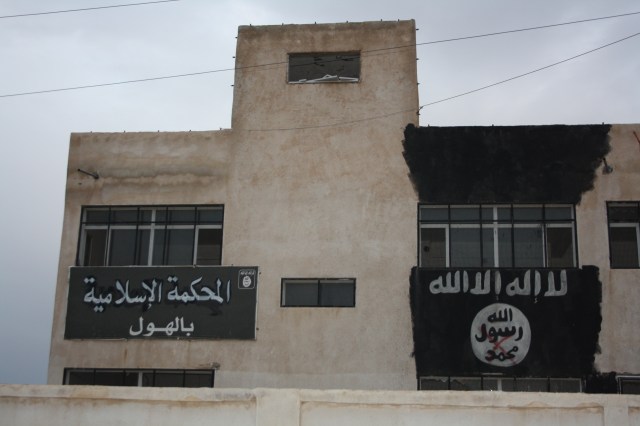
The remnants of IS rule were plainly visible as we drove through the town.  ‘The Islamic Court in al-Hawl’ one painted structure proclaimed grandly.  But the building was ransacked and deserted, and someone had painted a livid red YPG emblem above that of the former Islamist rulers.  IS was on the retreat.

‘If we had effective weapons, we could take Raqqa (the ‘capital city’ of the Islamic State) in a month’, said Kemal Amuda, a short and energetic YPG commander at a frontline position south of al-Hawl.  ‘But the area is very large.  And the airstrikes are of limited use.’


What would help?  Once again; ‘Anti-tank weapons, tanks, armored vehicles.’

The reason why the kind of heavy weapons these commanders desire have not been forthcoming may relate to the provisional nature of the alliance underpinning the SDF.

The west want to use this force as a battering ram against the Islamic State.  But the Kurdish core of the force have other ambitions, which include the unification of the cantons and acquiring control of the border.   The western coalition may well prefer to neutralize the IS advantage in heavy weapons by employment of air power, rather than afford the Kurds an independent capacity in this regard.

But despite the absence of such weapons, and the political complications, the SDF is proving a serviceable tool in the battle against IS.  The strategy appears to be to slowly chip away at the areas surrounding Raqqa City, in order to weaken the jihadis’ ability to amount a determined defense of the city.  The loss of al-Hawl meant that IS also lost control of  the Syrian section of Highway 47 from Raqqa City across the Iraqi border to Mosul, Iraq’s second city and the other jewel in the IS crown.

The later conquest of the Tishreen Dam by the SDF on December 27 further isolates Raqqa.  The dam was the last bridge across the Euphrates controlled by IS.  Its loss  very significantly increases the time it would take for the jihadis to bring forces from Aleppo province on the western side of the river to the aid of the city if it were attacked.

So the SDF, partnering with US air power,  appears to be aiming to split the Islamic State in two,  before attacking its most significant points.

The YPG component, which accounts for the majority of the fighting strength of the SDF, is an irregular force. It lacks  the resources and the structure of a regular army.   The fighters have only the simplest of equipment.  No body armor.  No helmets.  Night vision equipment also appears to be absent.  Medical knowledge and supplies are of the most basic variety.

Concerns have been raised regarding the high rate of attrition in this force, including of fighters who suffered wounds which ought to have not been fatal had skilled medical attention been close at hand.

But despite all this, they appear to get results, and morale was clearly high among the young combatants that I interviewed in the frontline areas south of al-Hawl and Hasakeh.

A particularly striking element was the constantly repeated refrain that the Islamic State fighters suffered from severe attrition and  noticeably declining motivation.

As we passed  through an eerily silent and seemingly deserted frontline area close to the Basil Dam 30 km east of Shaddadah, I came across a group of YPG men defending a position about three kilometers from the first lines of the jihadis.

The officer commanding this group refused to give his name or to be recorded. ‘Journalists aren’t really supposed to be around here,’ he remarked with a smile.  Nevertheless, in the conversation which followed, the commander gave a precise description of the  changing tactics used by the jihadis, and what in his view this portended for the fight against the Islamic State.

Once, the jihadis had attacked en masse.   The order, as described by the  commander, was that a number of ‘suicide cars’ – vehicles filled with explosive and intended to be spread panic among the defenders – would be the first to appear.  These would be followed by suicide bombers on foot, who would try to enter the positions of the defenders and detonate themselves.  Then a mass of ground fighters would follow behind, with the intention of breaking through the shocked defenders.

These methods had been effective, but also very costly in terms of manpower.  Now, however, the jihadis were evidently seeking to preserve the lives of their force. Their tactics had changed accordingly.  They moved in smaller groups, preferring to leave only token forces to defend areas subjected to determined attack.

The change, suggested the commander, derived from a dwindling flow of eager recruits, when compared to the days of summer, 2014.  ‘Formerly they were attractive as conquerors. Their power derived from intimidation and imposing terror,’ he concluded.  ‘This has now gone.’

This decline in the stream of recruits for Islamic State probably explains  an amnesty announced in October 2015 for deserters from the group’s ranks, as revealed in a recent trove of IS documents leaked to British researcher Aymenn Jawad al-Tamimi.  The announcement suggests that IS can no longer maintain in their entirety the ruthless and draconian methods that characterized its early stages.  The need for manpower precludes this.

The turn to international terrorism by IS in recent months is probably also explained by its loss of momentum in Iraq and Syria.  IS needs ‘achievements’ to maintain its ‘brand.’   Its slogan, famously is ‘Baqiya wa tatamaddad’ (remaining and expanding).  But expansion of its actual territorial holdings is no longer taking place.  The downing of the Russian Metrojet Flight 9268 on October 31, the coordinated attacks in Paris on November 13 and the series of attacks in Turkey suggest that action on the global stage may form a kind of substitute for gains on the battlefield closer to home


An Expanding US Presence?

What is most striking about the large swathe of northern Syria now administered by the Kurds is the atmosphere of near normality which is maintained there. This was not always the case.  This reporter first visited ‘Rojava’, as the Kurds call Syrian Kurdistan, in early 2013 – just a few months after the regime pulled out of most of north-east Syria.

At that time, the security structures put in place by the Kurds were rudimentary and somewhat chaotic.  And the remaining regime presence in the cities of Qamishli and Hasakeh far more extensive.

By the end of 2015, however, the rule of the PYD and its allies has taken on a look of solidity. Pictures of the martyrs are everywhere, testimony to the high cost that the establishment and maintenance of the enclave continues to exert.  But the checkpoints of the YPG, and the presence of both the Asayish (paramilitary police) and the ‘blue’ police force established by the Kurds leave no doubt as to who is in control here.

The US decision to partner with the Kurdish de facto force in this area is an acknowledgement  of this achievement.

Finding physical evidence of the American presence, however, is a challenge. YPG commanders interviewed were insistent that the process of calling in airstrikes was handled by the YPG alone, via a control room which was in contact with the US forces.  The Americans, in this telling, were responsible only for advising and some training of forces.

Yet it seems likely that the small complement of US special forces committed to Syria (up to 50 operators, according to the official US announcement) are doing more than simply training and advising.

In neighboring Iraqi Kurdistan, evidence has already emerged of the ground involvement of US special forces in operations against IS. It is likely that similar events are taking place, away from visibility, in Syria too.

According to a recent report in the leading regional  newspaper Al-Hayat, plans are afoot to broaden the US presence, with the construction of a base in which, according to a western official quoted by the paper, ‘US experts will reside and from which they will travel to battle lines with ISIS.’  The base, according to al-Hayat, is set to be built outside the town of Derik (al-Malkiyah), deep in the heart of the Kurdish controlled area in north east Syria.  These reports, if they have substance, suggest a  deepening of the military alliance between the US and the Kurds of Syria.


Partners

The SDF consists nominally of 8 separate militias. The other elements of significance (apart from the YPG and its female section, the YPJ) are the Jaysh al-Sanadid (Army of the Brave) group –  an armed formation of the Shammar tribe in Syria, the Syriac Military Council, which represents the Syriac Christians of northern Syria and the Jaysh al-Thuwar (Army of Revolutionaries), which is a gathering of a number of small, non-jihadi groups who emerged from the Free Syrian Army and the rebellion against Assad.

Of these, the Sanadid is the most numerous and serious, numbering perhaps 5000 fighters.  I visited the palatial residence of the leader of Sanadid, Sheikh Hamidi Daham al-Hadi , outside the village of Tel Alo, and attended a funeral of three fighters of the movement that took place at a cemetery adjoining the village.  The Sheikh acknowledged the primary role of the YPG in the SDF, and noted that the alliance of Sanadid and YPG represented the latest chapter in a long history of cooperation between the Kurds and the Shammar tribe in northern Syria.

The Shammar are a large Beduin tribe, with branches across the Middle East and a long standing rivalry with the Saudi monarchy, who Sheikh Daham al-Hadi, notably, describes as ‘the first ISIS.’

The presence of the Shammar in the SDF is significant because if the force is to proceed further southwards, it will need the support or at least the acquiescence of Sunni tribes in the area. So far, only the Shammar and the Shaitat tribes have linked up with the SDF.

The other component parts of the SDF are less numerous, but of equal political importance, each in their own way.

The Syriac Military Council, with perhaps 2000 fighters, is the third significant military presence in the SDF. The small, fragmented rebel groups of the Jaysh al-Thuwar number only a few hundred fighters each.  And while these groups contain skilled fighters who have been at war ceaselessly for five years, their general level of organization as observed is clearly not on the same level as that of the YPG.

But the political usefulness of the Arab rebels as a presence in the SDF has nevertheless been demonstrated in recent days.


When the SDF captured the Tishreen Dam on the Euphrates River from IS on December 27th, this technically involved a violation of a red line previously issued by the government of Turkey to the Kurds.

In a statement issued on July 1, 2015, the government of Turkey issued a statement forbidding  any action west of the Euphrates River by the Kurds.

The capture of the Dam brought SDF fighters west of the river. But Turkish Prime Minister Ahmet Davutoglu subsequently said that as far as he was aware, it was Arab fighters who had crossed over.

This statement by the Turkish prime minister perhaps reflected the limited options Ankara has for enforcing its red lines, now that Russian air power is engaged in the skies over Syria.

But it also was certainly a product of the ambiguity inherent in the very nature of the SDF, which enabled the Turks to save face by ‘interpreting’ the move west of the Euphrates in a way which previously would not have been possible.


What happens next?

As of now, the slow and grinding offensive of the SDF and US air power against Islamic State looks set to continue.  It constitutes the main military effort against IS in Syria.

There remains an obvious contradiction in it, between the political differences of the Kurds and those of the Americans regarding Syria’s future.  For the Kurds, apart from the issue of uniting the cantons, the SDF represents the military part of a much larger political project. This is intended to result in the establishment of a federal Syria with a ‘constitution recognizing the rights of all minorities.’   On December 10th, after a two day conference in Derik, it launched a political wing, the Syrian Democratic Assembly.

Neither this assembly, nor the PYD, have been invited to the talks in Vienna intended to negotiate an end to the war in Syria.

But this war, in truth, currently looks nowhere close to conclusion. In the meantime the Syrian Kurds have carved out an enclave constituting over 20% of the territory of the country in which something approximating normal life is able to take place.

This alliance is currently moving forward against the Islamic State.

The jihadis are far from a spent force.  On January 15th, they launched a ferocious counter-attack against Assad regime forces in the Deir el-Zur area.  A massacre of civilians followed.     The remaining IS capacity for murder should not be underestimated.

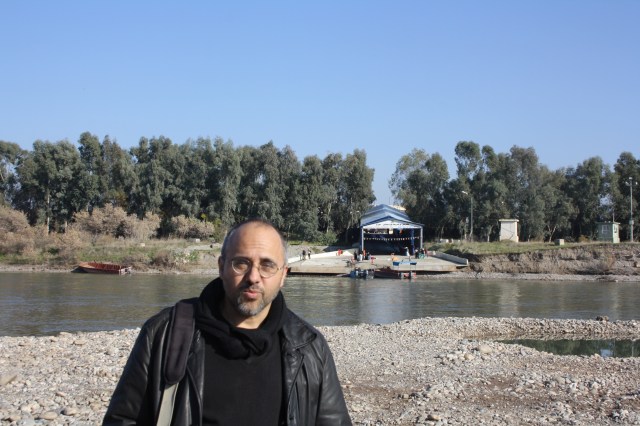
Still, as we crossed the Tigris River from northern Syria to Iraq, two memories remained particularly vivid.

The first was of Kobani. As we entered the ruined city, a celebration was taking place.  About a hundred young Kurds were dancing in an open area, Kurdish music blaring from a primitive sound system, with the ruined, macabre buildings casting their shapes all around.

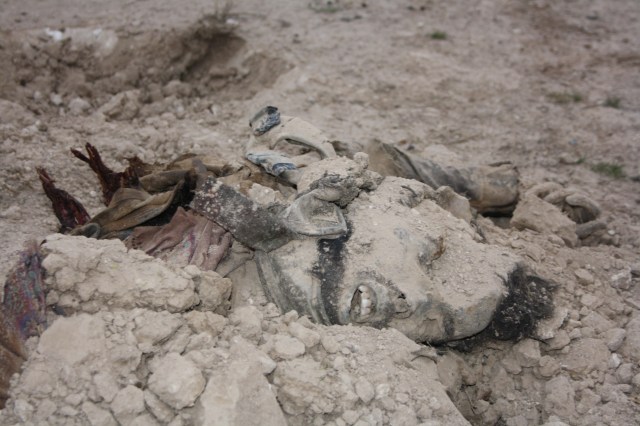
The second  was of a clump of strange mounds that we found by the roadside in the desert south of al-Hawl. These, on closer inspection, were the torn corpses of a group of IS fighters – killed perhaps in an airstrike.

Their foes had covered them lightly with earth before continuing south.  The sightless eyes stared skyward.  The war against Islamic State and the larger war of which it is a part are far from over. But on this front at least, the direction is clear.  The SDF is moving forward.


Posted in Uncategorized | 4 Comments

Eclipse of the caliphate


Jerusalem Report, 18/1

Erbil, the capital of Iraqi Kurdistan, in the last days of 2015 is a place that appears to have risen from a near-death experience.

In the summer of 2014, the fighters of the Islamic State (IS) got to within 45 kilometers of this city. Around 30 percent of the inhabitants left. The foreign companies that had turned Erbil into a boom town hurriedly pulled out.

In their place, throngs of refugees filled all the available empty spaces. US air power stopped the advance of the jihadis, but the Iraqi Kurds were left bruised and shaken.

I visited the city at that time. It was a place in a state of shock. Since the 1990s, the Kurds of the Kurdistan Regional Government (KRG) in the north of strife-torn Iraq had become accustomed to viewing themselves as a haven of sanity and industry in the heart of the Middle East. In the summer of 2014, the Iraqi Kurds discovered just how fragile all that was. And just how easily the most frenzied of the region’s furies could force their way in.

A year on, they have recovered their composure. The refugees are still here, but they are now in tent encampments or housing, rather than on the streets and in disused buildings. The foreigners have begun to return. The restaurants are full on weekday evenings. The Islamic State has been driven back to the western side of the Tigris, all along the plain between Erbil and Mosul.

Now it is the Kurds and their allies who are outside the main cities of IS, rather than the other way round. Yet, Erbil has not become immune. An IS suicide bomber hit the US Consulate on April 17 – a cocky demonstration on its part that even the most security-saturated parts of the city were not immune to penetration.

I am here again to take a look at the ground war against IS in Iraq and Syria, a year after the jihadis reached their furthest point of advance.

The year 2015 was not an especially good one for the Islamic State. Its slogan, famously, is “bakiyawa’tatamaddad” – remaining and expanding. As of now, the first of these objectives remains firmly in place, the second far less so. With the Kurdish Pesh Merga outside Mosul, and further south the Iraqi Golden Division inside Ramadi City, and Tikrit, Baiji and Sinjar lost in the course of the year. 2015 was a year of slow contraction for IS in Iraq.

In Syria, too, IS has lost ground. Here, the unlikely partnering of US air power with a local franchise of the Kurdish PKK, the militant Kurdistan Workers’ Party, is mainly responsible for the advances. In Syria, too, it was US air power that was the crucial addition to the fight that halted and reversed the headlong advance of the jihadis.

In both the Iraqi and, even more, the Syrian cases, the crucial contribution of air power was to nullify the advantage enjoyed by the jihadis because of their possession of heavy weapons. Neither the Pesh Merga, the KRG’s military force, nor the lightly armed YPG People’s Protection Units in Syria had any real response to the up to date artillery, armored vehicles and Humvees – looted from the garrison at Mosul – that the jihadis could put into action.

US air power served to even the playing field. The courage and tenacity of the Kurdish fighters could then come into play. It is a formula that has proved tentatively successful. It halted the jihadis and is now very slowly pushing them back.

Interviews with commanders and fighters of the Pesh Merga, revealed a growing confidence that the Islamic State had passed its high point as a semi-conventional military voice.

Captain Rebin Rozhbayane, a commander of the Pesh Merga special forces, describes largely quiet frontlines in which the initiative is now in the hands of the Kurds. “Mortars, sniping but no major attacks at the moment,” he tells me, as we meet in the lobby of a hotel in the Christian section of Erbil.

Rozhbayane, a 10-year veteran of the Pesh Merga, commands a rapid reaction force of 80 fighters on the Gwer front.

IS is no longer seeking the initiative, the captain notes. Rather, they now appear content to wait. It is the Kurds who are moving forward. “Mosul is the next target,” he asserts. This, Iraq’s second city with a mainly Arab population, however, is likely to prove a tougher target. IS’s ability to proclaim itself a “state or caliphate” rather than simply a jihadi fiefdom in Iraq largely rests on its holding Mosul. The taking of this city in August 2014 was the key moment in the Islamic State’s advance and the group will defend it with all means available.

This is not the case, however, with the generality of its holdings. IS now needs to conserve resources.

Rozhbayane notes that the latest major victory of the Kurds, in Sinjar city, was achieved against relatively minor resistance. The desperate determination with which IS pressed its offensive in Kobani at the end of 2014 against the YPG and US air power cost it heavily. Some 2,000 jihadi fighters are thought to have died in the ruins of that Syrian Kurdish city. But by the end of January, IS was forced to retreat. The lesson the jihadis learned from this is that unless a point absolutely must be held, it is better to abandon it than to risk another costly defeat like Kobani.

Even in Ramadi, which IS clearly wanted to keep, a force of only about 1000 jihadis was left to face the assault of 10,000 Iraqi government troops, backed by US aircraft.

Kamal Kirkuki, former speaker of the KRG’s parliament, a veteran of the ruling Kurdish Democratic Party (KDP) and now a commander of the Pesh Merga on the north-west Kirkuk front, tells me that “ISIS has declined and is morally weak. They no longer have the force to attack us.

IMG_3380


“What they can do,” he adds, “is terror attacks.” Kirkuki is referring to specific events in the Kirkuk area. But the sense that IS may be returning to focused terrorist attacks as its ability to expand militarily evaporates was repeated to me many times during the course of my time in Iraq and Syria.

The turn of the jihadis toward international terrorism – with the downing of the Russian Metrojet Flight 9268 on October 31 and the coordinated attacks in Paris on November 13 – are ominous signs of the potency that a refocused IS.could have.

A European volunteer with the Pesh Merga told me in Erbil that “we need to fight IS here or we’ll be fighting them in Europe in 10 years.”

The rhetoric of this statement is impressive and there is a deeper truth to it. However, it may well be that, tactically, the correlation is more complex. The more IS loses ground in its “state,” the more it may turn its attention to terrorism against both near and far enemies to maintain the sense of momentum on which it depends.

For the Iraqi Kurds, there is, of course, a larger political context to all this. Kirkuki, who is known as one of the more nationalist of senior KDP members, refers to Iraq as a “failed state” and advocates the establishment of three states to replace it – “Kurdistan, Shia-stan and Sunni-stan.”

KRG President Massoud Barzani recently announced the recommencement of preparations for a referendum on independence in the KRG area. Plans were afoot before IS erupted across the border in the summer of 2014. Now that the jihadis have been held and the immediate danger has passed, the notion is returning to the agenda.

There are complications, however. The Patriotic Union of Kurdistan, the KDP’s rivals, are close to Iran and would be likely to oppose a bid for separation. The West’s position remains ambivalent.

But the very fact that independence has returned to the agenda is an indication both of the perceived waning threat of IS and of the persistent, structural problems facing Iraq, of which the Sunni jihadis are a manifestation, rather than a cause.

In Syria, the situation is even more complicated. The “border” that separates northern Iraq from northern Syria is now administered by Kurdish forces on both sides. The process of administration and passage at the FishKhabur/Semalka crossing is orderly enough. A traveler passes through one set of Kurdish officials, across the Tigris river in an old metal barge, and then past a second bureaucratic process on the other side.

But the seeming tranquility belies a strained reality. The Kurds may control an uninterrupted area of ground all the way from the Iraq-Iran border to seven hours’ drive into Syria. But the Iraqi Kurdish KDP and the PKK-oriented Syrian Kurdish PYD remain implacable rivals.

In northeast Syria, though, the ambiguities go beyond the narrow Kurdish context.

The last positions of the Assad regime still remain deep in the area of Kurdish control, with tension between the sides never far from the surface.

The regime’s presence has been eroded in recent years. Where once there was an imposing government checkpoint at the entrance to Qamishli city, the main urban center of “Rojava,” the Syrian Kurdish domain, now Assad’s forces remain confined to a few clearly defined points of the city.

The regime soldiers look scruffy and exhausted, not so different from the rebels. Every so often, one sees a well-fed mukhabarat (secret service) type in a leather jacket moving about close to the regime facilities.

Caution is advised. The regime tries every so often to force young Kurds into the ranks of its army. The Kurdish security forces resist.

Syrian Kurdistan is a much poorer, more provisional affair than the KRG. In the KRG, a class of KDP-linked people have enriched themselves enormously and an atmosphere of consumerist normality prevails. IS put a dent in this in 2014, but it has now been contained.

In Syrian Kurdistan, by contrast, there is still something of the atmosphere of revolution, of scant resources and devotion. The YPG militia have proven the most powerful irregular force in northern Syria apart from IS itself. The partnering of US air power with Kurdish determination on the ground has brought the YPG to within 30 kilometers of the “capital” of the Islamic State – Raqqa City.

There is a central dilemma in this partnership, however. The PKK, the evident “mother organization” of the PYD and YPG, remains on the US and EU list of terrorist organizations. There appear to be no serious efforts under way to amend this.

The result is that while YPG fighters are responsible for calling in US airstrikes against IS targets, legal restrictions on supplying their fighters mean that they operate in the most primitive conditions, almost always without helmets and body armor, often without boots, without night vision equipment and without anything approaching adequate medical provisions.

In spite of all this, they are covering ground, and driving IS back.

In the town of al-Hawl, 40 kilometers east of Hasakeh city and liberated in mid-November, I saw the swiftly rotting remains of the primitive administration that IS had established in the town. The painted black signs proclaiming the “Islamic court” in Hawl painted over with the YPG’s vivid red and the building broken and abandoned.

IMG_3478

The next target is Shadadi, further south, Kemal Amuda, a YPG commander tells me at a frontline position south of the city. The intention is to cut Mosul off from Raqqa and split the Islamic State in two.

“We need better weapons systems,” says Amuda. “Anti-tank weapons, tanks, armored cars. Then we could take Raqqa in a month. Support from the air isn’t enough.”

As of now, the US appears to be supporting a rebranding of the Kurdish YPG that will allow the deepening of cooperation.

In October 2015, a new anti-IS coalition, called the Syrian Democratic Forces (SDF), was announced. This force brings together the YPG with the remains of non-jihadi rebel formations in northern Syria – Shams al Shamal, Thuwar Raqqa and others, and with a militia of the Shammar tribe, the so-called Jaysh al Sanadid (Army of the Brave).

It is a somewhat lopsided affair, however. The 40,000 strong YPG accounts for around 90 percent of its strength. The Sanadid has about 5,000 fighters, the remaining rebel groups substantially fewer. The goal of the SDF is clearly to enable the Kurds to avoid (or seek to avoid) accusations of separatism, and the US to avoid accusations of favoring the Kurds.

There is a built in tenuousness to the political side of the alliance. The American goal is to bring a force into the IS capital of Raqqa city, and by so doing terminate any notion of the Islamic State as an actual quasi-state entity.

The Syrian Kurds are more interested in uniting the Kurdish cantons along the Syrian-Turkish border and thus completing their control of the Syrian side of the border (a prospect that alarms and infuriates the Turks). On December 26, the SDF completed the conquest of the Tishreen Dam.

This target could form part of a drive toward Raqqa (it removes from IS the chance to rush forces from Aleppo province to the city). Or it could be the commencement of a Kurdish push westward to begin the unification of the cantons.

But while the politics remain deeply ambiguous, once again, the military direction seems clear – IS is losing ground in northern Syria, slowly, but surely.

IMG_3429

A YPG commander at a frontline position describes to me the changing tactics employed by the jihadis. Where once they sent waves of men across open ground, preceded by “suicide cars,” now they move in small groups, cautiously, seeking to preserve manpower. “Their power is derived from intimidation and imposing terror,” suggests the commander. “This has now gone. They are afraid of us and of the international coalition.”

It is important, of course, not to exaggerate the advances made against IS. Both Raqqa and Mosul remain formidable targets, along with much additional territory. But the direction of Western supported coalition forces is clear – and it is forward.

Even if IS continues to be eroded, this will not answer the bigger questions concerning the future arrangement of what was once Iraq and Syria. The clashes of formidable regional powers – Saudi Arabia, Iran and Turkey – and global ones – the US and Russia – will continue independently of the fate of the jihadi entity.

But in a region in which good news is scant, the survival of two very different Kurdish projects in northern Iraq and northern Syria, and their successful rallying in partnership with the West against perhaps the most graphically murderous manifestation of political Islam in recent times is a point of light.

In the desert south of Hawl, I came across what initially looked like a small clump of mounds on the side of the road. On inspection, these were the bodies of IS fighters torn apart in a coalition air strike during the fighting a month earlier. The sightless eyes stared skyward. The Kurds had covered the bodies lightly with sand before continuing south. These unrespected dead were a silent indication of the current direction of the war.

IMG_3465

As of now, the Islamic State is remaining – but retreating.

IMG_3724


Posted in Uncategorized | 1 Comment

ISIS is retreating – but ISIS isnt the main problem

PJmedia, 19/1

On a recent reporting trip to Iraq and northern Syria, two things were made apparent to me — one of them relatively encouraging, the other far less so. The encouraging news is that ISIS is currently in a state of retreat. Not headlong rout, but contraction.

The bad news?

Our single-minded focus on ISIS as if it were the main or sole source of regional dysfunction is the result of faulty analysis, which in turn is producing flawed policy.

Regarding the first issue, 2015 was not a particularly good year for ISIS. In the course of it, the jihadis lost Kobani and then a large area to its east, bringing the Syrian Kurdish fighters of the YPG and their allies to within 30 km of the Caliphate’s “capital” in Raqqa city.

In late December, the jihadis lost the last bridge over the Euphrates that they controlled, at the Tishreen Dam. This matters because it isolates Raqqa, making it difficult for the Islamic State to rush reinforcements from Aleppo province to the city in the event of an attack.

Similarly, the Kurdish YPG advanced south of the town of al-Hawl to Raqqa’s east.

In Iraq, the Iraqi Shia militias and government forces have now recaptured Ramadi city (lost earlier in 2015) following the expulsion of ISIS from Tikrit and Baiji.

The Kurdish Pesh Merga, meanwhile, have revenged the humiliation they suffered at the hands of ISIS in the summer of 2014. The Kurds have now driven the jihadis back across the plain between Erbil and Mosul, bringing them to the banks of the Tigris river. They have also liberated the town of Sinjar.

The city of Mosul nestles on the western side of the river. It remains ISIS’s most substantial conquest. Its recapture does not appear immediately imminent, yet the general trend has been clear. The main slogan of ISIS is “Baqiya wa’tatamaddad,” “Remaining and Expanding.” At the present time, however, the Islamic State may be said to be remaining, but retreating.

This situation is reflected in the confidence of the fighters facing ISIS along the long front line. In interviews as I traversed the lines, I heard the same details again and again regarding changing ISIS tactics, all clearly designed to preserve manpower.

This stalling of the Islamic State is the background to their turn towards international terror, which was also a notable element of the latter half of 2015. The downing of the Russian airliner in October, the events in Paris in November, and the series of suicide bombings in Turkey since July attest to a need that the Islamic State has for achievement and for action. They need to keep the flow of recruits coming and to maintain the image of victory essential to it.

Regarding the second issue: seen from close up, the Islamic State is very obviously only a part, and not necessarily the main part, of a much larger problem. When talking both with those fighting with ISIS and with those who sympathize with it in the region, this observation stands out as a stark difference in perception between the Middle Eastern view of ISIS and the view of it presented in Western media. The latter tends to present ISIS as a strange and unique development, a dreadfully evil organization of unclear origins, which is the natural enemy of all mainstream forces in the Middle East.

From closer up, the situation looks rather different.

ISIS has the same ideological roots and similar practices as other Salafi jihadi organizations active in the Syrian arena. ISIS treats non-Muslims brutally in the areas it controls, and adheres to a rigid and fanatical ideology based on a literalist interpretation and application of religious texts. But this description also applies to Jabhat al-Nusra, the al-Qaeda franchise in Syria.

Nusra opposes ISIS, and is part of a rebel alliance supported by Saudi Arabia, Qatar, and Turkey. In March 2015, when Nusra captured Idleb City in northern Syria, the city’s 150 Christian families were forced to flee to Turkey. Nusra has also forcibly converted a small Druze community in Idleb. The alliance Nusra was a part of also included Muslim Brotherhood-oriented groups, such as the Faylaq al-Sham militia, which apparently had no problem operating alongside the jihadis.

ISIS is not a unique organization; rather, it exists at one of the most extreme points along a continuum of movements committed to Sunni political Islam.

Meanwhile, the inchoate mass of Sunni Islamist groups — of which ISIS constitutes a single component — is engaged in a region-wide struggle with a much more centralized bloc of states and movements organized around the Islamic Republic of Iran, which is committed to a Shia version of political Islam.

The Middle East — in Yemen, Iraq, Syria, and to a lesser extent Lebanon, all along the sectarian faultline of the region — is witnessing a clash between rival models of political Islam, of which ISIS is but a single manifestation.

The local players find sponsorship and support from powerful regional states, themselves committed to various different versions of political Islam: Iran for the Shias; Saudi Arabia, Turkey, and Muslim Brotherhood-supporting Qatar for the Sunnis.

The long awakening of political Islam as the dominant form of popular politics in the Middle East started decades ago. But the eclipse of the political order in the region, and of the nationalist dictatorships in Iraq, Syria, Egypt (temporarily), Tunisia, and Yemen in recent years, has brought it to a new level of intensity.

States, indifferent to any norms and rules, using terror and subversion to advance their interests, jihadi armed groups, and the refugee crises and disorder that result from all this are the practical manifestations of it.

This, and not the fate of a single, fairly ramshackle jihadi entity in the badlands of eastern Syria and western Iraq, is the matter at hand in the Middle East.

Posted in Uncategorized | Leave a comment