Jerusalem Post, 28/7
The kidnapping of the Russian-Israeli Princeton doctoral student and Middle East analyst Elizabeth Tsurkov in Baghdad is the latest indication of who really runs Iraq. The Ktaeb Hizballah organization, identified by the government of Israel and by people close to Tsurkov as the body responsible for her abduction, is a legal part of both Iraq’s ‘security forces’, and, in a different iteration, of its parliament, and of its ruling coalition. Simultaneously, it is engaged in an ongoing campaign of harassment, kidnapping and possibly also killing of US and western targets in Iraq, on behalf of its paymasters and controllers in Iran.
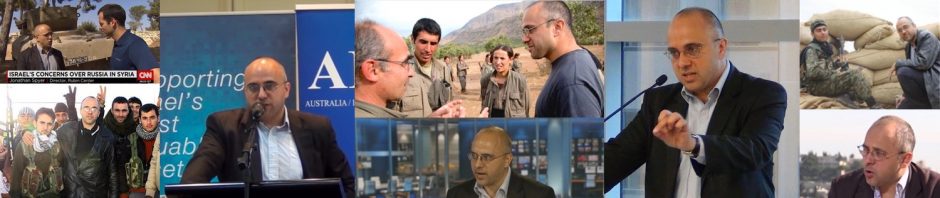
I should probably at this point declare an interest. Elizabeth Tsurkov is not the first Israeli citizen to have enjoyed this organization’s hospitality. That honor, such as it is, belongs, I believe, to myself. In the summer of 2015, as part of a reporting project on the then little noted Shia militia mobilization in Iraq, I spent a few days with the organization’s fighters in Anbar Province, western Iraq. I even interviewed KH’s legendary founder and leader, Abu Mahdi al Muhandis, at a dusty militia base outside the oil town of Baiji, north of Baghdad. At the time, the ISIS war was at its height, and the Shia militias were oddly and momentarily on the same side as the US-led coalition. They had been mobilized as part of the ‘Popular Mobilization Framework’ (PMU) to face the ISIS challenge.
The Islamic State in Iraq is a fading memory. This does not mean, of course, that it or something like it will not rise again. Iraq’s Sunnis are for now a defeated and apparently largely quiescent population. No one should assume that this stance will last for ever. But the Shia-dominated PMU, in any case, is still in existence, is now part of the state security forces, and is growing stronger.
Unlike Tsurkov, I managed to get myself a safe distance from Ktaeb Hizballah before it discovered who I was. I have not changed the assessment of the group that I made at that time, gathered from observation of its fighters in action, and from talks with rank and file operatives and commanders. Ktaeb Hizballah was then, and remains, in its own way an impressive organization. The fighters I spoke to saw themselves as part of an elite fighting force. That self image is probably exaggerated. But they are a well-equipped, tactically able, youthful and committed militia. Analogous, if analogies are necessary, to the organization’s namesake in Lebanon a couple of decades ago, before the Islamic Republic of Iran began to build the latter into a semi conventional army.
The US has long been aware of the threat posed by Ktaeb Hizballah. Abu Mahdi al Muhandis was killed in a US drone strike in the Baghdad airport area in January, 2020. It was the same strike which killed IRGC Qods Force commander Qassem Soleimani. The disappearance of its founder has not curtailed the organization’s activities. Ashab al Kahf (the Companions of the Cave), considered by many Iraq watchers to be a front for the organization, killed a US citizen, Stephen Troell, in Baghdad in November, 2022. On July 14, KH organized a noisy protest outside the US embassy in Baghdad. The Tsurkov kidnapping is just part of an ongoing campaign targeting westerners.
Alongside all this, the group is part of Iraq’s ruling establishment. Ktaeb Hizballah took part in the 2021 Iraqi elections. Its ‘Hoquq’ (Rights) bloc formed part of the Coordination Framework, which brought together various pro-Iran Shia parties and IRGC-supported Shia militias in their political iteration. In October 2022 the Coordination Framework managed to out-maneuver its rivals and emerge as the core of the current Iraqi government.
One militia leader quoted in a recent article by veteran Iraq researcher Michael Knights referred to current Prime Minister Mohammed Shia al-Sudani as a ‘general manager’, saying that ‘the prime minister must not monopolize the state’s decisions; rather, he must refer to the Coordination Framework…for strategic decisions, whether political, economic, or security.’
A parliamentarian associated with the militias said that ‘the muqawama (resistance – a word used to describe the pro-Iran element) has come to represent the official view of Iraq, and it is the one running affairs today.” Some observers of Iraq, indeed, have begun to refer to Sudani’s administration as the ‘muqawama government.’
Sudani’s government has steeply increased the number of fighters organized within the PMU. There are now 216,000 combatants serving in this framework. The current government has also allowed the PMU to create a contracting company, named after (who else) Ktaeb Hizballah’s Abu Mahdi al-Muhandis. The company is modelled after the IRGC’s contracting and engineering arm, the Khatam al-Anbiya Construction Headquarters.
There are already indications that the current Iraqi government is giving the Muhandis company preferential treatment in awarding tenders. The establishment of the company further blurs the dividing lines between the Iraqi state and the Iranian interest, and raises the possibility of the Iranian project amassing revenue from Iraqi state contracts. This in turn would establish a process whereby western or Gulf investments and projects in Iraq would end up producing revenue for the rival Iranian interest in the country.
Oddly, amid all this, the al-Sudani government of which Ktaeb Hizballah forms a part also seeks to maintain normal relations with the US. Sudani has expressed the hope that Iraq could maintain relations with the US of a similar type to those enjoyed by Saudi Arabia and other oil and gas producing nations. He met with Defense Secretary Lloyd J.Austin in March. The two expressed their commitment to the ongoing ‘360-degree U.S.-Iraq strategic partnership.’
It is a strange sort of ‘partnership.’ One branch of the power structure promotes normalized economic relations with the west. Another seeks to establish bodies and processes whereby western and Gulf investment ends up providing net economic benefits for the Iranian project that opposes both. And still another part carries out shootings, assassinations, and kidnappings of western targets. As of now, the United States appears to be prepared to accept this arrangement.
Elizabeth Tsurkov, in short, is currently incarcerated by a partner within the current Iraqi government. Rumors currently doing the rounds suggest that she is no longer in Iraq, but rather has been transferred across the border to Iran. This would make sense. Ktaeb Hizballah, in addition to being a coalition partner in Iraq, is a component in a structure seeking the absorption of the Iraqi state by the Islamic Republic of Iran. The ability of Ktaeb Hizballah to carry out murders and abductions on Iraqi soil without consequence is testimony to just how far that ambition has advanced, and, indeed, to who really runs Iraq.

 Jonathan Spyer